Frozen Storage in Dammam: 2026 Business Relocation Guide
Frozen storage in Dammam is becoming a deciding factor for companies relocating or expanding into Saudi Arabia’s Eastern Province in 2026. Dammam’s port access, industrial zoning, and highway links make it an obvious logistics base — but moving a business there means solving the same question twice: where does your inventory live, and how does it stay in good condition while your operation settles in?
For businesses handling anything perishable, pharmaceutical, or climate-sensitive, that question matters just as much as office space or staffing. Get the storage plan wrong during a move and the damage shows up in spoiled stock before the first full month of operations is even done.
Why Dammam Keeps Attracting Relocating Businesses
Dammam sits inside one of the Kingdom’s most developed industrial corridors, with direct access to King Abdulaziz Port and highway routes connecting to Riyadh, the Eastern Province’s manufacturing base, and neighboring Gulf states. Saudi Arabia’s industrial cities authority continues to expand infrastructure specifically to support this kind of logistics and manufacturing growth. You can review current industrial zoning and infrastructure development through the Saudi Authority for Industrial Cities (MODON).
That infrastructure investment is exactly why so many distribution, food, and pharmaceutical companies treat Dammam as their first Eastern Province foothold rather than starting in Riyadh alone.
The Relocation Mistake Businesses Keep Making
Companies often nail down a lease and a floor plan months in advance, then scramble for storage capacity in the final weeks before the move. By then, specialized frozen or chilled space is harder to secure on short notice, and temporary workarounds rarely hold up for sensitive inventory.
When a Relocating Business Actually Needs Frozen Storage
Not every relocation needs sub-zero capacity, but several categories of business cannot operate without it:
- Frozen food distributors and importers
- Ice cream, bakery, and ready-meal manufacturers
- Pharmaceutical and vaccine logistics providers
- Seafood processors and exporters
- Any business holding bulk frozen inventory during a facility transition
Rather than risk a gap in sub-zero capacity during the move itself, many of these businesses now secure Frozen Storage in Dammam ahead of time, so inventory has a reliable, temperature-stable home the moment it arrives — independent of how long the new facility’s own freezer infrastructure takes to come online.
What About Everything That Isn’t Frozen?
The bulk of most companies’ inventory is not temperature-sensitive at all. Packaging, dry goods, textiles, hardware, documents, and furniture all belong in standard ambient space — and trying to force non-sensitive stock into expensive climate-controlled rooms just wastes budget during an already costly move.
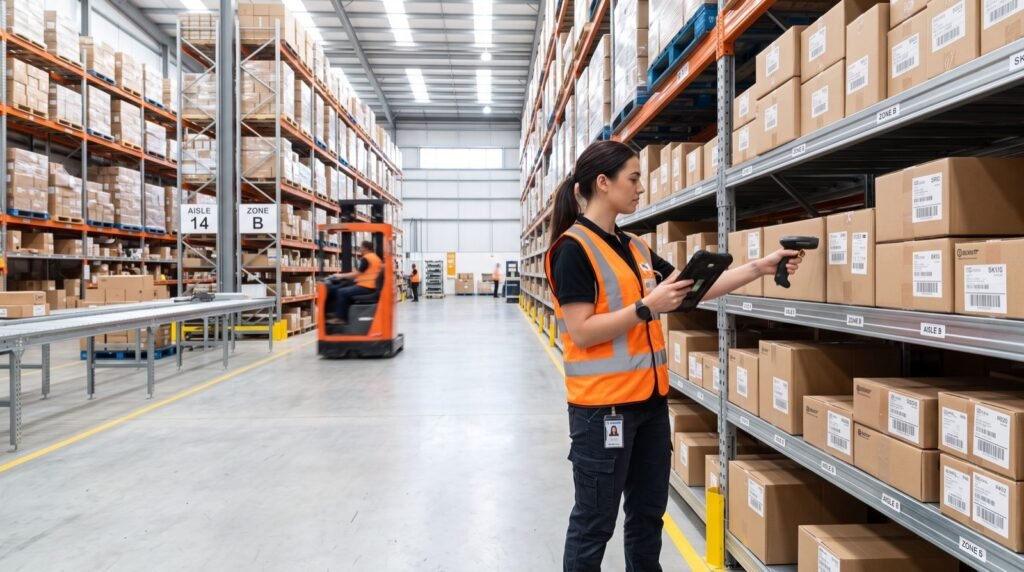
Scalable Ambient Storage in Saudi Arabia gives relocating businesses flexible capacity for this majority-share inventory, without tying up space or cost that should be reserved for the items that actually need it.
Right-Sizing Storage During a Move
A useful rule of thumb: separate your inventory into “temperature-critical” and “everything else” before you even start pricing warehouse space. Most companies discover 70–85% of their stock falls into the second category once they actually audit it.
Frozen vs Ambient Storage During Relocation: At a Glance
| Consideration | Frozen Storage | Ambient Storage |
|---|---|---|
| Typical use during a move | Perishable, pharma, frozen food stock | Dry goods, equipment, documents, furniture |
| Lead time to secure | Should be booked weeks ahead | Generally more flexible, shorter notice |
| Relative cost per square meter | Higher | Lower |
| Risk if delayed | Spoilage, total stock loss | Minor handling or organization delays |
| Best booked relative to move date | 4–6 weeks prior | 2–3 weeks prior |
How Early Should You Plan Storage Before Relocating to Dammam?
Ideally, storage planning starts the same week you confirm the move, not the week before trucks arrive. Frozen capacity especially should be locked in four to six weeks ahead, since specialized space fills up faster than general warehousing and cannot be improvised at the last minute.
The same logic that applies to inventory applies to the physical move itself. Just as you’d want reputable service experts handling a household or office relocation, your business deserves equally reliable partners handling the storage side of an interstate or international move — not whoever happens to have spare space that week.
A Real-World Example: A Pharma Distributor’s Move
Consider a regional pharmaceutical distributor relocating its Eastern Province operations closer to Dammam’s port for faster import clearance. The office lease and staff transfer were finalized months ahead, but cold-chain storage was treated as a detail to “sort out closer to the date.”
Two weeks before the move, the team discovered every nearby frozen facility with pharma-grade monitoring was already booked. The result was an expensive short-term workaround — renting refrigerated trucks as temporary storage — until proper capacity opened up a month later.
The lesson generalizes well beyond pharma: any relocation involving temperature-sensitive stock needs its storage contract signed before the lease is, not after. Ambient space is forgiving on timing; frozen and chilled space rarely is.
A Relocation Storage Checklist
- Audit inventory and split it into temperature-critical vs ambient-safe categories.
- Book frozen or chilled capacity a minimum of four weeks before the move date.
- Confirm ambient storage access hours match your operational schedule.
- Verify insurance coverage for goods in transit and in interim storage.
- Plan a phased handover so stock isn’t sitting in transit vehicles longer than necessary.
Frequently Asked Questions
How far in advance should I book frozen storage in Dammam before relocating?
Aim for four to six weeks ahead of your move date. Frozen capacity is limited and specialized, so last-minute bookings are far harder to secure than ambient space.
Do I need frozen storage if my business only occasionally handles perishables?
If any portion of your inventory has a manufacturer-stated cold-chain requirement, yes — even occasional frozen stock needs guaranteed sub-zero capacity, not improvised cooling.
Is ambient storage in Saudi Arabia suitable for office equipment during a move?
Yes, ambient storage is well suited to furniture, electronics, documents, and general equipment as long as humidity is properly managed at the facility.
Why is Dammam specifically popular for relocating businesses?
Its port access, industrial zoning, and highway connections to Riyadh and the wider Gulf make it an efficient logistics base for both domestic and regional distribution.
What happens if I underestimate how much ambient storage I need during a move?
Most providers can expand ambient allocation faster than frozen capacity, but last-minute requests during peak relocation periods can still mean paying a premium or settling for a less convenient location.
Planning Your Move to Dammam the Right Way
Frozen storage in Dammam deserves the same early planning as your lease, staffing, and licensing — not an afterthought once the moving trucks are already booked. Pair it with flexible ambient capacity for the rest of your inventory, and your 2026 relocation becomes a controlled transition instead of a scramble.